
Training delivered by Professionals, with over 3 decades of real life front line experience, engaging students through interacticion to enrich and embed the learning experience.
Get in touch with us at trainin2u@gmail.com
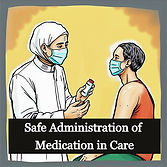
Safer Management of Medication Administration
Intended Audience
This training is aimed at people who are involved in handling, assisting with, prompting, or administering medication in care, health, or support settings.
Typical learners include:
-
Care assistants and support workers
-
Domiciliary (home care) carers
-
Residential and nursing home staff
-
Support workers in supported living services
-
Healthcare assistants (HCAs)
-
School staff supporting pupils with medical needs
-
Early years staff where medication may be administered (e.g., prescribed medicines)
-
Mental health support workers
-
Social care staff working under medication policies
-
Team leaders, supervisors, and managers overseeing medication procedures
It may also be relevant for:
-
staff who prompt or remind service users to take medication
-
staff responsible for recording medication administration (MAR charts)
Course Aims
-
Promote safe medication practices in health and social care settings
-
Reduce the risk of medication errors such as incorrect dosage, missed medication, or giving medicine to the wrong person
-
Ensure understanding of legal responsibilities and duty of care
-
Improve knowledge of different types of medication and their uses
-
Develop safe administration techniques following care plans and prescriptions
-
Ensure accurate recording and documentation using MAR charts and medication records
-
Promote safe storage, handling, and disposal of medicines
-
Increase awareness of side effects, adverse reactions, and allergies
-
Maintain dignity, consent, confidentiality, and safeguarding principles when supporting service users
-
Improve confidence and competence of staff administering medication
-
Support compliance with CQC standards, workplace policies, and best practice guidance
Course Duration
3 hours
Course Validation
There is no fixed legal interval set nationally, but recurrence is guided by employer policy, CQC expectations, and risk assessments.
Common practice in UK care settings:
-
Refresher training: every 1 year (most common standard)
-
Full update / re-assessment: every 2–3 years
-
Earlier refresher required if:
-
Medication errors occur
-
Policies or legislation change
-
Staff change role or responsibilities
-
Long gap in medication administration duties
-
CQC inspection highlights gaps in competence
-
-
⚖️ Regulatory expectation
Under UK care standards (including guidance used by the UK Care Quality Commission), staff must be:
“trained, competent, and confident to administer medicines safely”
So frequency is based on:
-
workplace risk
-
service user needs
-
staff competency checks
-
organisational policy
Rather than a strict legal timetable.
Course Content
-
Understand legislation and policies relating to medication administration
-
Recognise different types of medication and their safe handling requirements
-
Understand roles and responsibilities (e.g., delegation, competency, accountability)
-
Administer medication safely according to care plans and prescriptions
-
Support or prompt medication use appropriately (where allowed)
-
Accurately complete medication records (e.g., MAR charts)
-
Prevent medication errors (wrong dose, wrong person, missed doses, etc.)
-
Understand storage, disposal, and security of medicines
-
Recognise and respond to adverse reactions or side effects
-
Maintain dignity, consent, and safeguarding principles
Individual £50.00 PP
Group / on-site booking (up to 12 people) £400.00
Training 2 U, covers first aid training, paediatric first aid tracing, Cardiopulmonary aresuscitatioo, moving and handling training evacuation Chair Training in all of these areas, Merseyside, Lancashire, Cheshire, Manchester, Southport, Formby, Crosby, Waterloo, Liverpool, Bootle, Litherland, Seaforth, Netherton, Maghull, Kirkby, Huyton, St Helens, Whiston, Rainford, Billinge, Newton Le Willows, Widnes, Runcorn, Warrington, Garston, Page Mass, Walton, Fazakerley, Aintree, Kirkdale, Everton, Anfield, Wallacy, Birkenhead, Ellesmere Port, Port Sunlight, New Brighton, Oxton, Heswall, Arrowe Park, Wirral, Salford, Trafford, Wigan,