


Choosing the Right First Aid Training for Your Workplace

Choosing first aid training is an important part of workplace preparation. HSE guidance says the level and type of training should follow your organisation’s first-aid needs assessment. This guide summarises HSE leaflet GEIS3 (rev2), published in February 2024, to help employers know what to consider when arranging training.
Start with your workplace first-aid needs assessment
Employers must provide adequate and appropriate first-aid equipment, facilities and people so employees can receive immediate attention if they are injured or become ill at work. The needs assessment should identify the level of first-aid cover required and therefore the training that is suitable.
The right course depends on your workplace’s risks, work activities, workforce and arrangements. An industry label on its own does not decide whether EFAW, FAW or another course is appropriate. Review the assessment when work or risks change.
EFAW or FAW: how do you choose?
HSE describes Emergency First Aid at Work (EFAW) and First Aid at Work (FAW) as common workplace options. EFAW covers essential emergency response topics. FAW covers a broader range of injuries and medical conditions. Your needs assessment should determine which level is appropriate for your workplace.
GEIS3 sets out minimum training and assessment contact times, excluding breaks: EFAW is at least six hours over one day; FAW is at least 18 hours over three days; and FAW requalification is at least 12 hours over two days. Alternative or specialist training should have content and duration matched to the needs assessment.
What should employers check when choosing a provider?
HSE no longer approves first-aid training providers or qualifications, and it does not endorse one particular provider or delivery route. GEIS3 advises employers to carry out appropriate due diligence and check that the course is suitable for their assessed needs.
Trainer and assessor competence, including relevant first-aid knowledge and teaching or assessment qualifications.
Quality arrangements, such as annual review of trainer performance, learner feedback, a complaints process and assessment records.
Whether teaching follows current accepted first-aid practice and the syllabus covers the needs identified in your workplace assessment.
Whether learners are assessed as competent and certificates clearly identify the qualification, the provider, issue or commencement details and validity.
You do not have to keep a written record of every check, but HSE says retaining one can help you show how you selected a provider. Ask providers to explain their arrangements if you need evidence for your own review.
What to check with blended first aid training
Blended learning, combining online study with face-to-face training, is an accepted way to deliver workplace first-aid training. HSE advises employers to check that learners can use the technology, have support while studying, and that the provider has suitable identity checks and assessment for the online element.
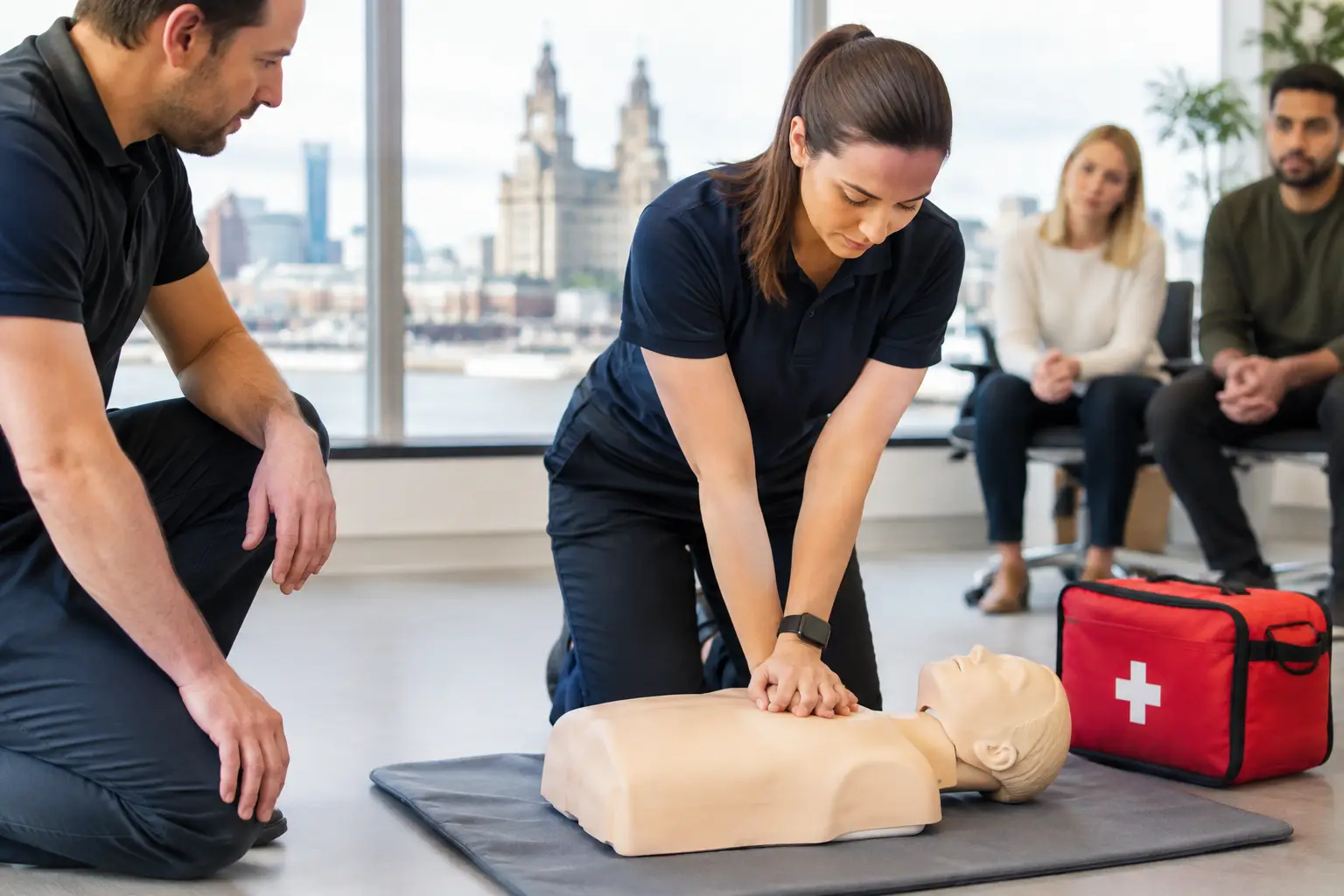
There must also be sufficient classroom time for practical learning and assessment. HSE strongly recommends assessing practical skills through direct observation so the learner’s competence can be seen. Employers should set aside adequate working time for employees to complete the training.
Class size and learner support
Training should allow each learner to practise and demonstrate competence. HSE notes that classes larger than 12 without additional trainers or assessors may make it harder to meet individual learning needs or assess competence. Tell your provider about relevant learning or communication needs so reasonable adjustments and suitable support can be discussed.
Questions to ask before you book
Which course level matches our first-aid needs assessment, and why?
What are the course content, contact hours and practical assessment arrangements?
How are trainer competence and training quality reviewed?
What information will appear on the certificate?
For blended learning, how much face-to-face practical training is included and how are practical skills assessed?
Training2U provides practical workplace first-aid training in Liverpool and across the North West, including on-site group delivery. We can discuss your assessed requirements, course options, practical arrangements and group training for up to 12 learners before you book.
Official HSE guidance
This article is a practical summary of HSE guidance, not a substitute for carrying out a workplace first-aid needs assessment or reading the full HSE publication.


Comments