


Are Online Certificates Valid for First Aid Work?

A certificate can look reassuring in a staff training file. But when a colleague collapses, a child starts choking or an evacuation is required, the real question is not whether someone completed an online module. It is whether they can act safely, confidently and without delay. Are online certificates valid? Sometimes, but validity depends on the course, the provider, the role and what your organisation needs people to do in the real world.
For employers, schools, care settings and community organisations, getting this right protects people and helps demonstrate that you have taken your responsibilities seriously.
Are online certificates valid for workplace training?
Online certificates can be valid evidence that a learner has completed a course. They may be suitable for awareness training, policy updates, knowledge-based subjects and some refresher learning. A well-designed online course can help staff understand procedures, recognise hazards and revisit essential information at a time that suits the organisation.
However, completion is not the same as practical competence. A digital certificate does not automatically prove that a person can perform CPR effectively, use an evacuation chair, place someone in the recovery position, move a person safely or respond to an anaphylactic emergency.
For any role involving physical skills, equipment or urgent decision-making, employers should look beyond the certificate itself. You need confidence that training has been properly assessed and that it reflects the risks in your workplace.
What makes an online certificate credible?
The value of any certificate rests on more than the words printed on it. Before accepting online training for compliance or staff development, consider who provides it, how learning is checked and whether the course meets the standard expected for your sector.
The course must match the job
A short online awareness course may be useful for office staff who need to understand basic fire safety or infection control principles. It may not be enough for a designated first aider, a nursery practitioner responsible for paediatric emergencies, or a care worker who must administer medication safely.
Start with the duties your team may face. If staff are expected to carry out a hands-on task, they need an opportunity to practise it under observation. Reading instructions and answering multiple-choice questions cannot show whether someone can position their hands correctly for chest compressions or handle evacuation equipment safely on a staircase.
Assessment must test more than recall
Online learning commonly checks knowledge through quizzes. This can be useful, but it tests whether someone can recognise the right answer on screen, not whether they can apply it under pressure.
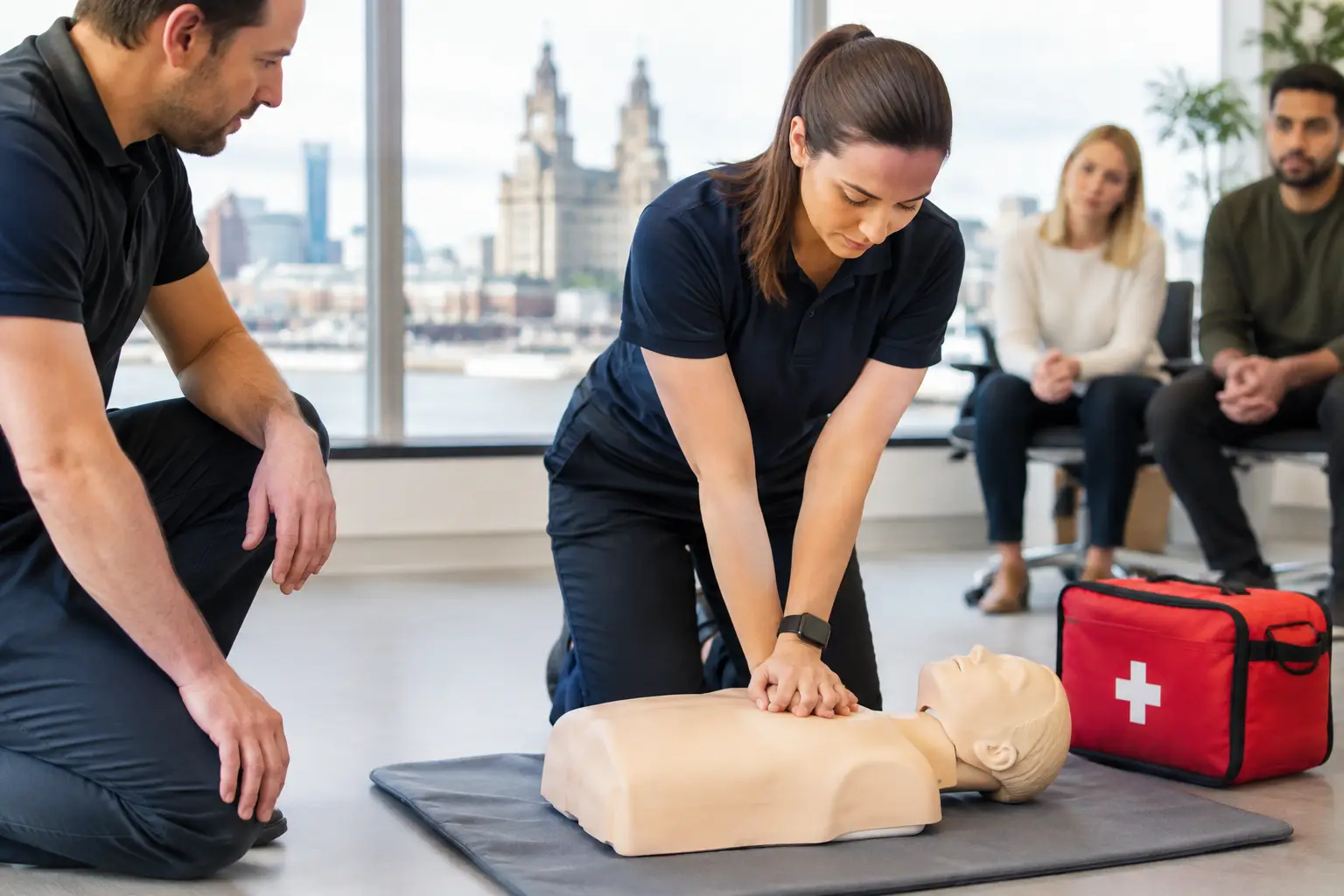
Credible practical training includes demonstration, supervised practice and assessment by a competent instructor. Learners can ask questions, correct mistakes and build muscle memory. These are the details that matter when every second counts.
The provider and certificate should be verifiable
Check the training provider’s experience, the course syllabus, the assessor’s competence and the certificate’s stated validity period. Where a qualification or accredited course is required by your organisation, commissioner, insurer or regulator, confirm that the course meets that specific requirement before booking.
Be cautious of certificates that promise a regulated or nationally recognised qualification after a very short, entirely online course with no practical assessment. A low price and instant download can be attractive, but they may leave a gap between what the certificate suggests and what your people can actually do.
First aid is where practical training matters most
For workplace first aid, employers must make adequate and appropriate provision based on a first aid needs assessment. The right level of training will depend on factors such as the size of your workforce, workplace hazards, shift patterns, locations, accident history and the people using your services.
Online learning can support first aid knowledge. It can reinforce the signs of cardiac arrest, explain how to report an incident or help staff prepare for a refresher course. It is particularly useful as part of a blended approach, where theory is completed beforehand and practical skills are taught face to face.
But a full first aid response is physical. It involves checking danger, communicating clearly, assessing a casualty, making safe decisions, delivering CPR, using an AED where available and managing bleeding, choking or shock. Those actions need realistic practice, feedback and assessment.
This is especially relevant in schools, nurseries, care homes and workplaces with higher risks. Your staff may be the first people present when an emergency happens. They need more than information. They need the confidence to step forward.
Five checks before you accept online training
If you are reviewing a digital certificate or choosing a course for your team, use these five checks to make a sound decision:
1. Check the purpose of the training. Is it awareness, a refresher, a formal qualification or preparation for a practical duty? Do not use an awareness course to fill a competence gap.
2. Check your own requirements. Your risk assessment, internal policies, contractual obligations, insurer and sector guidance may require a particular course standard or practical element.
3. Check how the learner is assessed. For practical roles, ask whether there is live assessment of practical skills rather than an online quiz alone.
4. Check the provider’s credentials. Look for clear course information, named standards, experienced instructors and a certificate that can be verified if needed.
5. Check that the learning can be applied at work. Training should reflect your environment, equipment, risks and emergency arrangements. A generic course is not always enough.
Keep records of your decision-making as well as the certificate. If you are ever asked why a particular course was selected, it helps to show that you considered the risks and chose training appropriate to your people.
When online training is a sensible choice
Digital learning has a useful place in a well-managed training programme. It can be an efficient way to deliver induction content, reinforce policy changes, cover theoretical knowledge or give staff a foundation before instructor-led training.
It can also help organisations keep training visible between formal sessions. First aiders benefit from regular reminders of emergency procedures, AED locations, incident reporting and the need to call emergency services promptly. Knowledge fades when it is not revisited.
The trade-off is clear: online training offers flexibility and convenience, while face-to-face training provides observation, correction and realistic practice. The safest approach is often to use both for the purposes they serve best.
Choose training that stands up in a real emergency
When selecting first aid or workplace safety training, ask a simple question: would this course prepare our staff to act effectively if someone needed help this afternoon?
Practical, instructor-led sessions allow learners to practise in a controlled setting before they face a genuine emergency. They can work with manikins, AED trainers, evacuation equipment or moving and handling techniques, and receive immediate feedback from a trainer who understands the pressures of frontline response.
For organisations across Merseyside, Lancashire, Cheshire and Greater Manchester, workplace delivery also brings training into the environment where skills may be needed. Staff can discuss site-specific risks, emergency arrangements and the people in their care. That makes compliance more meaningful and gives teams greater confidence.
Training 2 U delivers practical, accredited workplace courses led by professionals with extensive real-life clinical experience. The focus is not simply on issuing a certificate. It is on helping your people respond when it matters.
A certificate should confirm useful learning, not create false reassurance. Choose the format that matches the risk, give staff the chance to practise, and make sure your team is ready to protect the people who rely on them.


Comments