


Liverpool Workplace First Aid Guide for Employers

A cardiac arrest, severe bleed or choking incident does not wait for a convenient moment. It can happen on a busy warehouse floor, in a Liverpool office, during a school lunch break or while supporting a resident in a care setting. This Liverpool workplace first aid guide helps employers turn a legal duty into practical preparation, so people know what to do when every second counts.
First aid provision is not simply a box to tick for an audit. The right training, equipment and planning can protect your people, reduce the impact of an emergency and give staff the confidence to act before professional help arrives.
Start with a first aid needs assessment
UK employers must provide adequate and appropriate first aid arrangements for their workplace. What is adequate depends on your risks, the people on site and the way your organisation operates. There is no one-size-fits-all answer, and assuming a basic kit and an appointed person will cover every workplace can leave serious gaps.
Your first aid needs assessment should look at the nature of the work, known hazards, accident history, staff numbers, working patterns and the likelihood of visitors or members of the public needing help. Consider whether employees work alone, travel between sites, use machinery, handle hazardous substances or work at height. Also consider who is at greater risk, including young workers, pregnant employees, people with health conditions and those receiving care.
A small, low-risk office with stable daytime staffing may need a different arrangement from a construction team, manufacturing site, school, nursery or care home. Shift work matters too. A trained first aider who only works Monday to Friday is not sufficient cover for a site operating evenings, nights or weekends.
Document the assessment and review it whenever your workplace changes. A move to larger premises, new machinery, a growing workforce, altered shift patterns or a previous incident are all good reasons to revisit your provision.
Choose the right level of workplace first aid training
The assessment should lead the decision, rather than selecting a course because it is the shortest or most familiar option. For many lower-risk workplaces, Emergency First Aid at Work is a practical one-day course that gives staff the skills to respond to an unconscious casualty, breathing problems, CPR, use of an AED, choking, bleeding, shock and minor injuries.
Where the risks are higher, or where your assessment identifies a greater likelihood of serious injury or illness, First Aid at Work training is often more suitable. This more detailed qualification prepares learners for a wider range of workplace emergencies and supports stronger first aid cover in settings such as industrial workplaces, larger organisations and environments with higher-risk activities.
There are circumstances where general workplace first aid alone may not be enough. Schools, nurseries and organisations caring for children should consider paediatric first aid. Care providers may need staff trained in basic life support, anaphylaxis awareness, safe administration of medication, moving and handling, or evacuation chair use. The correct course depends on the duties staff perform and the people they support.
Refresher training deserves equal attention. Formal qualifications have renewal periods, but skills such as CPR and dealing with severe bleeding can fade long before a certificate expires. Annual refresher sessions help staff practise vital actions, correct poor habits and stay ready to respond under pressure.
Appointed persons and first aiders are not the same
An appointed person takes charge of first aid arrangements, such as maintaining the first aid box, calling emergency services and recording incidents. They do not automatically have the training or competence to provide first aid.
A trained first aider has completed suitable first aid training and can give immediate help within the limits of their knowledge and skills. In a very low-risk workplace, an appointed person may be enough. But where there is any realistic possibility of significant injury, illness or delayed access to emergency services, trained first aiders provide a far safer level of protection.
Employers should also avoid putting the whole responsibility on one willing employee. First aid cover must account for holidays, sickness, breaks, staff turnover and multiple work areas. A useful test is simple: if an emergency happened at the least convenient time, would a trained person still be available quickly?
Make your first aid arrangements visible
Training is only effective when staff know how to use the system around it. Employees should be told who the first aiders are, how to contact them and where first aid equipment is kept. Visitors and contractors need a clear route to help too, particularly on larger sites.
First aid boxes should be accessible, clearly marked and appropriate for the hazards identified in your assessment. Check contents regularly, replace used or out-of-date items and make sure supplies are not locked away from the people who may need them. Depending on the workplace, you may also need additional equipment such as burns kits, eyewash, trauma dressings, AEDs or specialist evacuation equipment.
An AED can be lifesaving in a cardiac arrest, but it should form part of a wider plan. Staff need to know where it is, how to retrieve it without delay and how to begin CPR while another person calls 999. Good training makes the sequence feel familiar rather than frightening.
Plan for the emergencies your workplace is most likely to face
Generic first aid knowledge is valuable, but the strongest arrangements reflect real workplace scenarios. A warehouse team may need to focus on crush injuries, falls, cuts and manual handling incidents. A kitchen may face burns, scalds, slips and choking. Schools need staff who can respond calmly to childhood illness, head injuries and anaphylaxis. Care settings may need to manage falls, deterioration in a person’s condition, medication-related concerns and emergency evacuation.
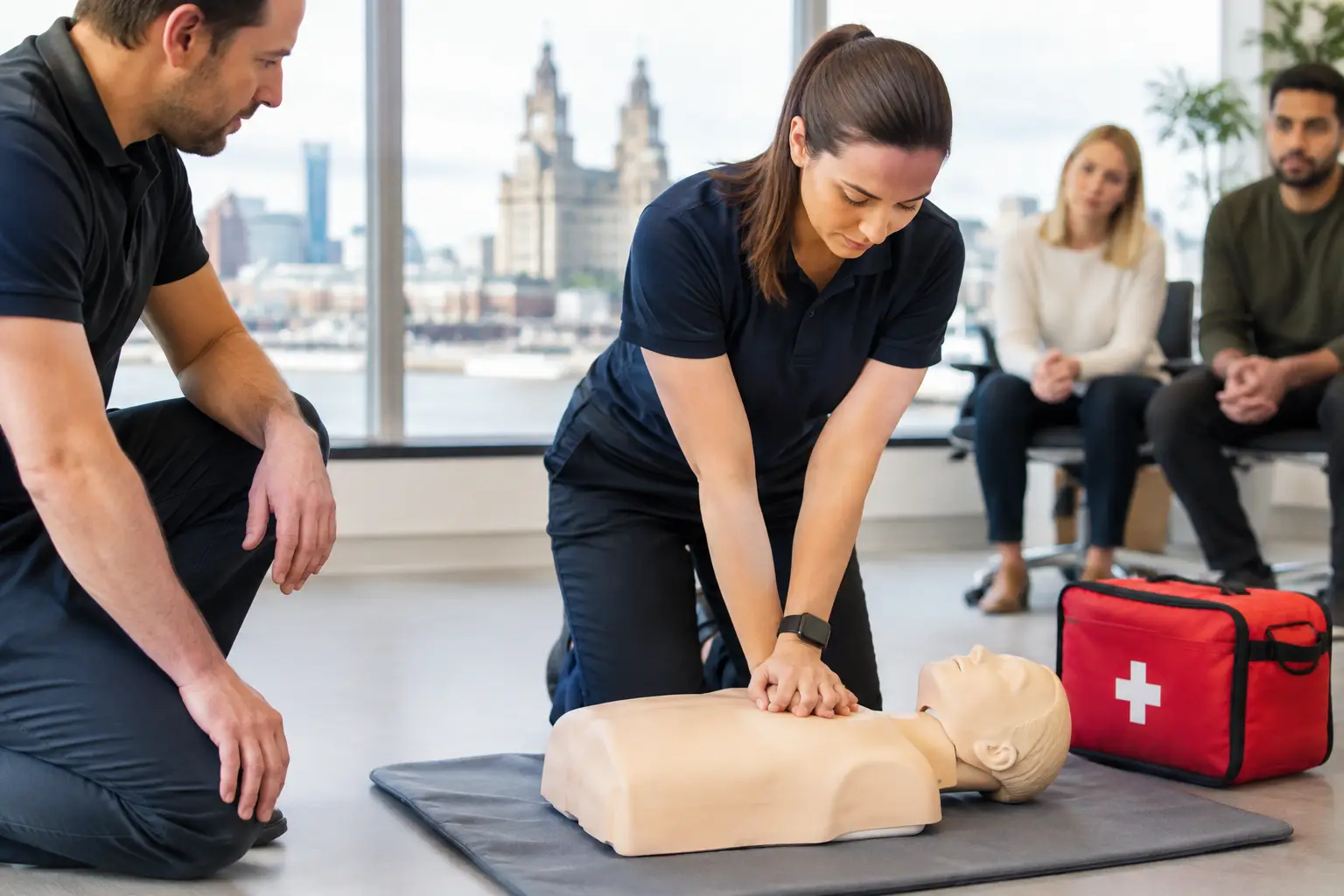
This is why practical, instructor-led learning matters. People do not gain confidence by reading a procedure once. They need to practise CPR on a manikin, position a casualty safely, apply pressure to bleeding, communicate clearly with emergency services and make decisions while someone is distressed nearby.
On-site delivery can make training more relevant because learners can discuss their own environment, equipment, hazards and evacuation routes. Training 2 U delivers workplace courses across Liverpool and the wider region with instructors whose teaching is grounded in more than three decades of frontline clinical experience. That real-world perspective helps teams understand not only what to do, but why the order of their actions matters.
Record, review and learn after an incident
Every first aid incident should be recorded appropriately. Accurate records can reveal patterns such as repeated slips in one area, recurring injuries linked to a task or a need for better equipment. They also help demonstrate that your organisation takes welfare and safety seriously.
After a significant incident, take time to review the response. Was a trained first aider available? Was equipment easy to find? Did staff know who to contact? Did the incident expose a training need or a weakness in your risk controls? The aim is not to blame individuals. It is to improve the system before the next emergency.
Confidentiality matters. Keep records secure and only include relevant information. Where an injury is serious or work-related, check whether it requires reporting under the applicable reporting arrangements and follow your organisation’s established procedure.
Give your team confidence before they need it
The best time to prepare for an emergency is before anyone is hurt or becomes unwell. Assess your risks honestly, train enough people for every shift, keep equipment ready and make responsibilities clear. Compliance is the starting point, but confident action is what protects a colleague, pupil, resident or visitor when the pressure is on.
A well-prepared team does more than meet its legal responsibilities. It creates a workplace where people know help is close, capable and ready to act.


Comments