


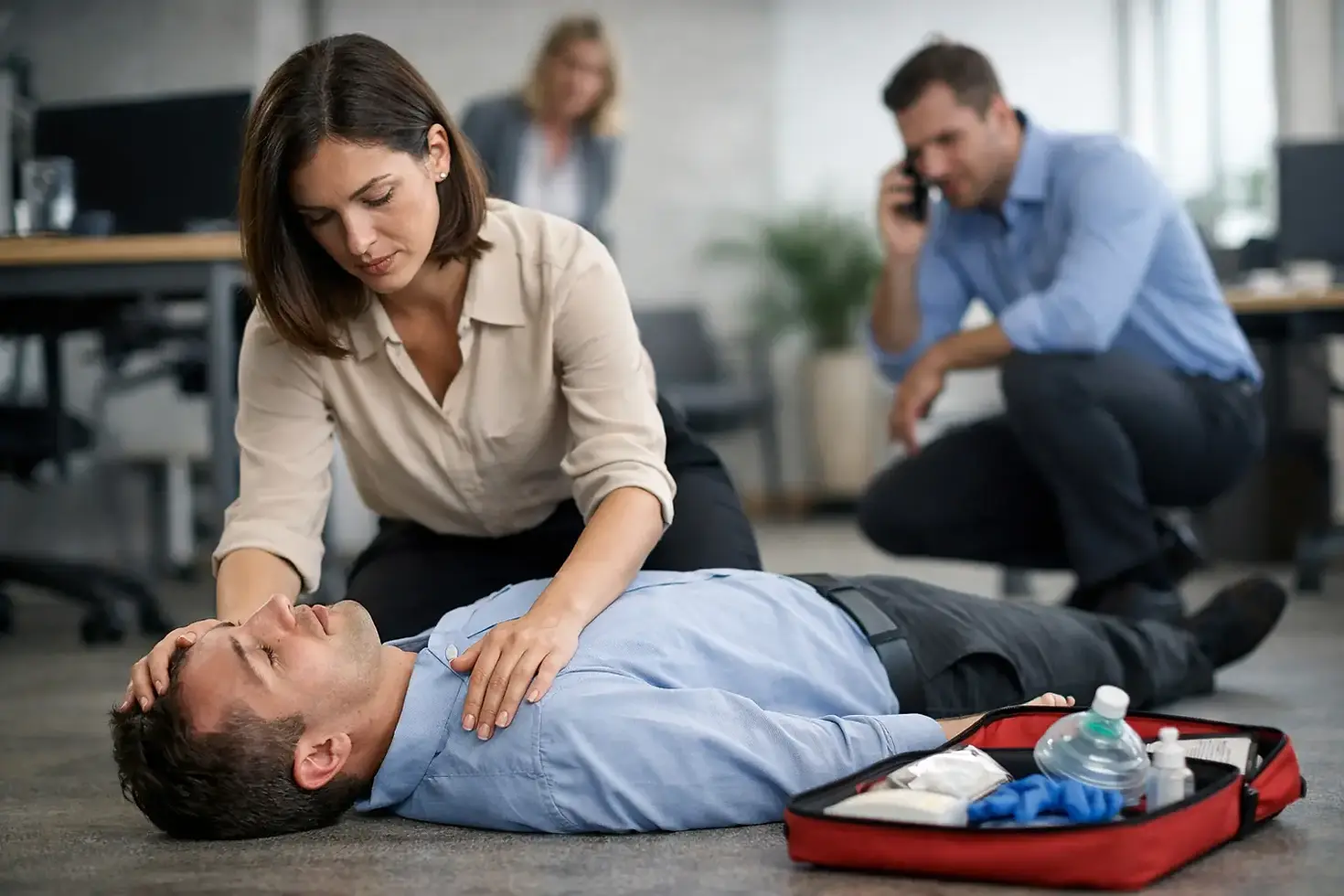
Handling Workplace Seizure Emergencies Safely
A seizure can begin without warning: a colleague may suddenly fall, become unresponsive or experience repeated jerking movements. In that moment, handling workplace seizure emergencies well is not about trying to diagnose the cause. It is about protecting the person from injury, monitoring what is happening and knowing when urgent medical help is needed.
For employers, managers and first aiders, this is a practical capability that protects people and supports your wider first aid responsibilities. Calm, informed action can prevent avoidable harm while preserving the person’s dignity at what may be a frightening time for everyone involved.
What a seizure can look like at work
Not every seizure looks the same. The type many people recognise is a tonic-clonic seizure, where a person may stiffen, fall, lose consciousness and make rhythmic jerking movements. They may also make unusual sounds, bite their tongue, lose bladder control or appear to stop breathing briefly. This can be alarming, but most seizures stop on their own within a few minutes.
Other seizures are less obvious. A person may stare into space, appear confused, stop responding, fumble with objects, wander or make repetitive movements. They may be awake but unable to communicate. In a busy office, school, warehouse or care setting, this may be mistaken for confusion, intoxication, poor behaviour or simply not paying attention.
Treat any sudden change in awareness, behaviour or movement seriously. Give the person space, look for immediate danger and seek assistance from a trained first aider.
Handling workplace seizure emergencies: what to do
Your first priority is to prevent injury. Move furniture, equipment, hot drinks, sharp objects and other hazards away from the person where it is safe to do so. If they have fallen, place something soft, such as a folded jumper or coat, under their head. Loosen tight clothing around the neck and remove glasses if you can do so without putting yourself or them at risk.
Time the seizure from the moment you first notice it. Accurate timing matters. It helps emergency services assess the situation and may be vital where the seizure lasts longer than expected.
Stay with the person and reassure those nearby. Ask a colleague to manage the surrounding area, keep onlookers back and arrange access for emergency services if needed. Privacy is particularly important in public-facing workplaces, schools and care environments. A crowd of well-meaning people can quickly make an already distressing event worse.
There are several things a first aider or colleague should never do during a convulsive seizure:
Do not restrain the person or try to stop their movements.
Do not put anything in their mouth, including fingers, a spoon, food, drink or medication.
Do not try to move them unless they are in immediate danger, such as near traffic, machinery or a fire risk.
Do not give food or drink until they are fully awake and able to swallow safely.
People cannot swallow their tongue during a seizure. Trying to force their mouth open can cause injury to them and to the person assisting.
When the jerking has stopped, check their breathing. If they are breathing but remain unconscious or very drowsy, place them in the recovery position where possible and continue to monitor them. Stay with them until they are fully alert, or until medical help takes over. They may feel confused, exhausted, embarrassed, emotional or have a headache afterwards. Speak calmly, explain what happened and do not rush them back to work.
If the person is not breathing normally after the seizure has ended, call 999 immediately and begin CPR if you are trained to do so.
When to call 999
A known epilepsy diagnosis does not always mean an ambulance is required. Some people have a clear management plan, recover in their usual way and do not need hospital treatment after every seizure. Ask about this only once they are able to respond, or check their individual care plan if one is in place.
However, call 999 without delay if it is the person’s first known seizure, the seizure lasts five minutes or longer, or another seizure begins before they have recovered. Emergency help is also needed if they are injured, have trouble breathing afterwards, are pregnant, have diabetes, or the seizure happens in water.
Trust your judgement. If you are unsure whether the person is recovering as expected, it is safer to seek emergency advice. Record the time, what you observed, any injury and the action taken. This gives paramedics useful information and supports an accurate workplace incident record.
Prepare before an emergency happens
The most effective response begins long before anyone needs first aid. Employers should consider seizures as part of their first aid needs assessment, particularly where staff or service users are known to have epilepsy or another condition that can cause seizures. The assessment should reflect your workplace, the number of people present, shift patterns, lone working, the distance from emergency services and hazards such as machinery, vehicles, stairs, kitchens or swimming facilities.
A personalised workplace plan can make a major difference. With the individual’s consent, it may set out their known triggers, typical seizure pattern, usual recovery time, emergency contacts, preferred support and clear criteria for calling an ambulance. It should be shared only with those who genuinely need to know, respecting confidentiality and data protection requirements.
This is not about singling someone out or making assumptions about what they can do. Many people with epilepsy work safely and successfully in a wide range of roles. The right approach is individual risk assessment, reasonable adjustments where required and practical preparation rather than unnecessary restriction.
For example, an employee who has brief, non-convulsive seizures may only need colleagues to understand that they should remain nearby and allow recovery time. A member of staff working around unguarded machinery, at height or alone may need additional controls. The answer depends on the person, their role and the workplace environment.
Medication and individual care plans
Some people have prescribed emergency medication for prolonged or repeated seizures. This may be included in an agreed healthcare or care plan, especially in schools, care settings and community services.
Emergency medication must only be administered by staff who are specifically trained, competent, authorised by the organisation and acting in line with the person’s agreed plan and local procedures. Good intentions are not enough. The wrong medicine, dose, route or timing can create serious risk.
Employers should ensure that plans are current, medicines are stored appropriately, consent and records are in place, and enough trained staff are available across relevant shifts. Staff should understand exactly when to call 999, including where prescribed medication has been given but the seizure does not stop or the person does not recover as expected.
Build confidence, not false reassurance
A certificate on the wall does not guarantee that someone will act effectively when a colleague collapses. People need the chance to practise the sequence: making the area safe, timing the event, protecting the head, monitoring breathing, placing someone in the recovery position and communicating clearly with emergency services.
This is especially valuable for teams that work with children, vulnerable adults, the public or high-risk equipment. Refresher training helps prevent common mistakes, such as putting objects in someone’s mouth or assuming a person is fine because the jerking has stopped.
Training should also help staff manage the minutes after a seizure. Recovery can be slow, and a person may not remember what happened. Give them quiet space, do not leave them alone until it is appropriate to do so, and arrange safe onward travel where needed. Someone who has had a seizure may not be fit to drive, return to a physically demanding task or resume safety-critical work immediately.
Training 2 U delivers practical, instructor-led workplace first aid training across Merseyside, Lancashire, Cheshire and Greater Manchester, helping organisations prepare teams to respond with confidence when every second counts.
After the incident: care, records and review
Once the immediate emergency is over, look after the person and review the response. Complete your incident reporting process promptly, recording factual observations rather than assumptions. Note the start and end times, what the seizure looked like, whether there was an injury, who provided assistance and whether emergency services attended.
If the event exposed a gap - perhaps no one knew where the first aid kit was, staff were unsure who should call 999, or a lone worker could not quickly summon help - act on it. Review your risk assessment, emergency arrangements and staff training. A seizure emergency is not only an incident to document; it is an opportunity to make the workplace safer.
When a person has a seizure at work, colleagues may remember the event for a long time. The standard you set matters. Prepare your people to protect someone’s safety, dignity and confidence with calm action when it matters most.


Comments