


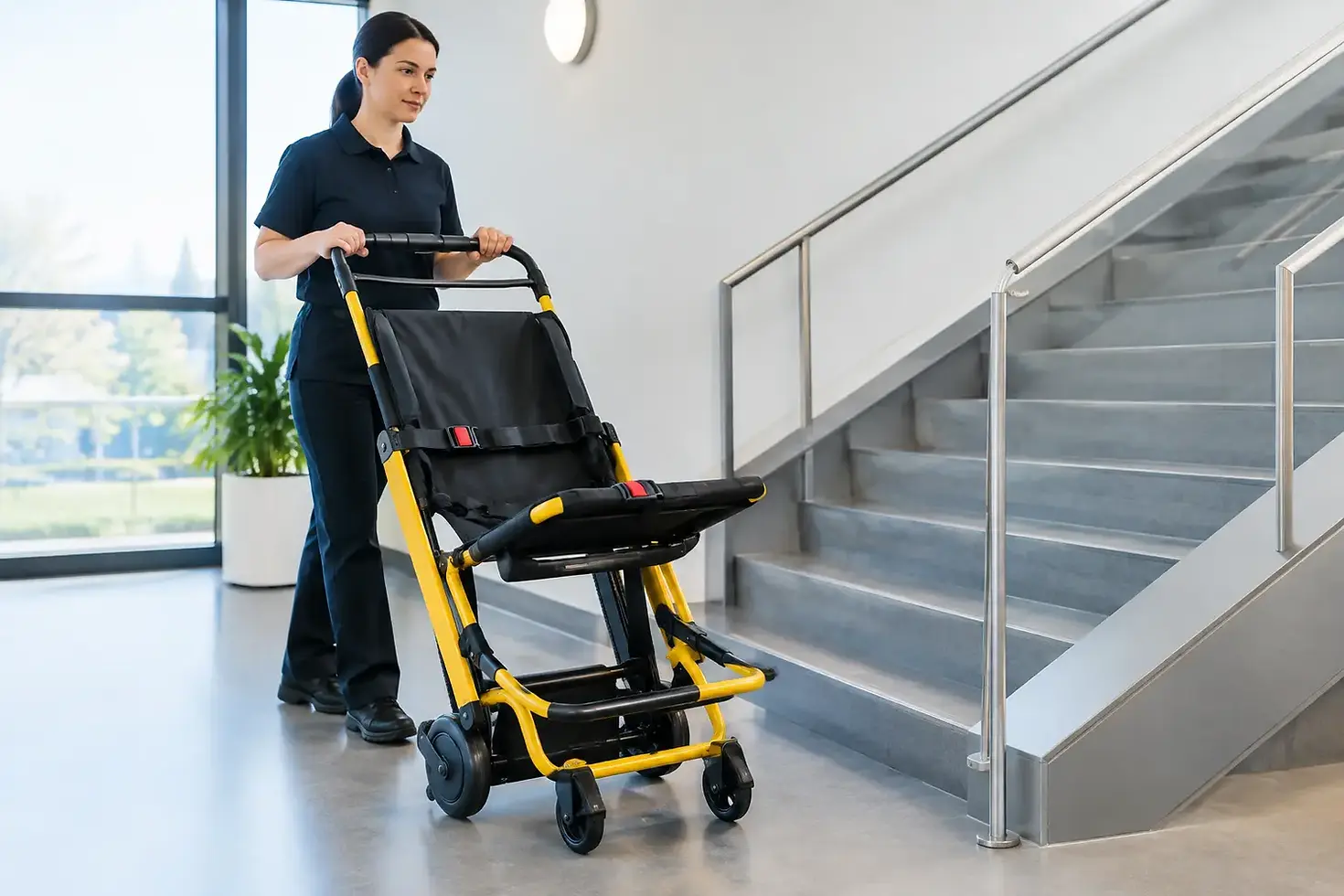
Evacuation Chair Reviews: What Matters Most
A chair stored beside a stairwell is not a complete evacuation plan. When a lift cannot be used during a fire or other emergency, the people responsible for that chair must be able to locate it, deploy it, transfer a passenger safely and descend with control. That is why evacuation chair reviews should look beyond star ratings and product claims. The right choice protects people, supports your emergency procedures and gives staff equipment they can use when every second counts.
For workplaces, schools, care settings and public-facing premises, the best evacuation chair is rarely simply the cheapest or most highly advertised model. It must suit the people in your building, the layout of your escape routes and the staff who may be required to operate it. Crucially, it must be backed by practical training.
What evacuation chair reviews should tell you
A useful review identifies how a chair performs in real conditions, not just how it looks in a product photograph. It should explain who the chair is designed for, whether it is suitable for a single operator, how it behaves on different stair types and what level of physical effort is required.
Look for detail on stability, braking, restraint systems and the quality of the tracks or stair-descent mechanism. A chair that glides steadily down a straight, wide staircase may be less straightforward on narrow turns, half-landings or older stairwells. Reviews that mention the building type and the experience of the operator are more valuable than a general comment such as “easy to use”.
It is also worth distinguishing between a review written after a brief demonstration and one based on repeated use or hands-on training. In an emergency, the operator may be dealing with smoke, alarms, confined space, a distressed passenger and limited visibility. Equipment needs to be intuitive, but staff still need the confidence and technique to use it correctly.
Start with your people and premises
Before comparing makes and models, assess who may need assistance to evacuate. This could include employees, pupils, residents, patients, visitors, pregnant people, people with temporary injuries or anyone whose mobility is affected during an emergency.
A Personal Emergency Evacuation Plan, often called a PEEP, may identify specific equipment and support arrangements for an individual. A General Emergency Evacuation Plan can address the needs of visitors and others who may require help but are not known in advance. An evacuation chair may form part of either plan, but it should never be treated as a one-size-fits-all solution.
For example, some passengers may need additional postural support, a second trained person, a different evacuation aid or a refuge arrangement while assistance is organised. A chair also has a safe working load. Check this carefully, along with the dimensions of your staircases, landings, doorways and any changes in level along the evacuation route.
A thorough risk assessment should answer practical questions. Where will the chair be kept? Can it be reached without entering a hazardous area? Which escape stairs are suitable? Who will operate it if the usual fire marshal is absent? How will you ensure the route remains clear?
Features worth comparing in evacuation chair reviews
Product features matter, but their value depends on your environment. The following areas deserve close attention when reading reviews or arranging a demonstration:
Stair-descent system: Track-based chairs can provide a controlled descent when used correctly, while other designs may require greater operator input. Understand exactly how the mechanism works and whether your staff can manage it safely.
Passenger restraints and support: A secure harness, head support and comfortable seating position can make a significant difference, particularly for passengers who are anxious, frail or unable to hold themselves upright.
Weight and manoeuvrability: A lightweight chair may be easier to deploy, but stability and build quality remain essential. Consider carrying, turning on landings and moving the chair through doors.
Operator handles and control: Handles should allow a safe posture and controlled grip. Reviews should not gloss over the physical demands placed on the operator.
Storage and visibility: Wall-mounted storage can keep the chair accessible, but only if it does not obstruct an escape route. Clear signage helps staff and visitors identify the equipment quickly.
Maintenance requirements: Check inspection guidance, service intervals, replacement parts and whether the chair can remain reliable after regular drills and training sessions.
Do not assume that one chair can safely meet every need within a large site. A multi-storey school, care home or office building may need equipment on more than one level, with trained staff assigned across shifts and departments.
The trade-off between simple operation and proper training
Manufacturers often describe evacuation chairs as simple to use. That can be true once a person has been shown the correct method and has practised it. It does not mean that untrained staff should attempt to use one for the first time in a live emergency.
Transferring a passenger into the chair is a moving and handling task. Staff must communicate clearly, use safe positioning, secure the restraints and avoid sudden movement. On stairs, poor technique can increase the risk of injury to both the passenger and the operator.
The most reassuring evacuation chair reviews often mention training because it is the point at which equipment becomes a workable emergency capability. Staff should have the opportunity to practise deployment, transfers, stair descent, landing turns and safe completion of the evacuation. They should also understand when to stop and seek additional support.
At Training 2 U, evacuation chair training is delivered practically in the workplace, allowing teams to train on the stairs, corridors and escape routes they will need to use. This makes it easier to identify problems that a showroom demonstration cannot reveal, such as awkward landings, restricted access or uncertainty over staff roles.
Check the chair against your fire procedures
An evacuation chair should sit within a wider emergency plan, not replace one. Your responsible person should ensure evacuation arrangements are considered within the fire risk assessment and that relevant staff understand their duties.
This means agreeing how assistance will be requested, who takes control of the chair, what happens if a trained operator is unavailable and where the passenger will be taken after leaving the building. A chair may help someone descend a staircase, but they may still need support to reach a place of safety.
Regular drills are useful, although they must be planned sensitively and safely. They can reveal whether staff can access the chair quickly, whether communication systems work and whether the designated stairwell is genuinely practical. Record training, inspections, drills and any actions taken following a review.
Questions to ask before you buy
A supplier demonstration is an opportunity to test claims made in evacuation chair reviews. Ask to see the chair folded and deployed, loaded and moved, and used on a staircase similar to your own. Where possible, involve the staff who will be expected to operate it.
Ask how the chair accommodates different passenger needs, whether one or two operators are recommended, what training is expected and how often skills should be refreshed. Confirm its safe working load and assess whether the chair is suitable for every stair route you intend to use.
You should also ask about servicing, inspection checks and replacement components. Equipment that is difficult to maintain can become an overlooked risk. A simple documented inspection routine helps ensure the chair remains present, accessible and ready for use.
A better standard for evacuation chair reviews
The strongest reviews do not promise that a particular chair will solve every evacuation challenge. They explain the conditions in which it works well, the training required and the limitations you need to plan around.
For UK organisations, that honest approach is the safest one. Choose equipment only after considering your people, your building and your procedures, then give staff practical opportunities to build confidence with it. A well-chosen chair, maintained properly and operated by trained people, can turn a difficult stair evacuation into a controlled, dignified response when someone is relying on your team.


Comments