


First Aid Refresher Course Options for Teams

Updated: 3 days ago
A first aid certificate can remain valid for three years, but confidence does not stay current simply because a date has not expired. CPR technique, emergency priorities and the ability to stay calm under pressure can fade if staff do not practise them. Choosing the right first aid refresher course options helps your team protect people, meet their responsibilities and act decisively when every second counts.
For employers, schools, care providers and community organisations, the right choice depends on more than the expiry date of a certificate. Your first aid needs assessment, the people in your care, workplace hazards and the experience of your staff should all shape the training you arrange.
Why refresher training matters before certificates expire
A medical emergency rarely gives people time to recall a course they attended years ago. A colleague collapses in a warehouse, a pupil has a severe allergic reaction, or a resident starts choking. In that moment, staff need usable skills: how to assess danger, call for help, begin CPR, use an AED and provide appropriate care until emergency services arrive.
The Health and Safety Executive strongly recommends annual first aid refresher training for workplace first aiders. This is separate from formal requalification. It gives staff the chance to revisit core techniques, ask questions about situations relevant to their setting and correct habits that may have developed since their original course.
A refresher also shows your organisation takes first aid seriously as an ongoing duty, rather than a certificate to renew only when it is about to lapse. It can be particularly valuable after staff changes, a workplace incident, a change in risk profile or the introduction of new equipment such as an AED.
First aid refresher course options to consider
The best option is the one that reflects the real risks your people face. A short annual session may be suitable for an established office team with trained first aiders. A care setting, school or higher-risk workplace may need more focused, role-specific practical training.
An annual refresher is designed to keep essential emergency skills current between formal qualifications. It commonly revisits the primary survey, recovery position, CPR, AED use, choking, bleeding, shock and the management of an unconscious casualty.
This option works well for appointed workplace first aiders holding Emergency First Aid at Work or First Aid at Work qualifications. It gives them hands-on practice without repeating their entire original course. Crucially, an annual refresher does not usually extend the validity of a regulated first aid qualification. Your team will still need to complete requalification training before their certificate expires.
For many organisations, on-site delivery makes this practical. Training can take place around operational demands and use realistic scenarios based on your premises, from a reception area or classroom to a production floor or care environment.
If your staff hold an Emergency First Aid at Work certificate that is approaching expiry, they may need to complete the full course again to retain that qualification. The course is generally suitable for lower-risk workplaces where a first aider may be required to respond to immediate life-threatening incidents.
This is more than a quick skills update. It includes assessment and certification, with practical instruction covering emergency response, CPR, AED awareness, choking, bleeding, shock and incident reporting. It is the right route where the organisation’s first aid needs assessment identifies Emergency First Aid at Work as appropriate.
First Aid at Work is intended for organisations with more complex hazards, larger workforces or a greater likelihood of serious injury or illness. The qualification is typically valid for three years, after which trained first aiders should complete the relevant requalification course before it lapses.
A First Aid at Work requalification revisits a wider range of conditions and injuries than a basic annual refresher. It is often appropriate for manufacturing, construction, logistics, larger premises, facilities teams and organisations where staff may work with machinery, chemicals, manual handling risks or vulnerable people.
Do not assume every workplace needs this higher-level qualification. Your first aid needs assessment should determine the number of first aiders required and the level of training they need. The aim is proportionate provision that genuinely protects your people.
Basic Life Support training focuses on the actions that make the greatest difference in the first minutes of a cardiac arrest or life-threatening emergency. Staff practise recognising an unresponsive casualty, raising the alarm, delivering effective CPR and using an automated external defibrillator.
This can be an excellent refresher option for teams that need confidence in a specific emergency response but do not require a full workplace first aid qualification. It is especially useful for schools, sports venues, community groups, public-facing teams and organisations that have installed an AED on site.
The trade-off is scope. Basic Life Support training builds vital life-saving capability, but it does not replace the broader first aid provision your risk assessment may require.
Nurseries, schools, childminders, after-school clubs and organisations supporting children need training that reflects the differences between adult and child emergencies. A paediatric refresher can revisit CPR for babies and children, choking, severe bleeding, seizures, head injuries, asthma, anaphylaxis and other common childhood conditions.
For early years settings, check that the course you select meets the requirements relevant to your registration and role. A short update may build confidence for an experienced team, but it may not replace the full paediatric first aid qualification needed for compliance.
Targeted training for known risks
Some of the most valuable refresher sessions are built around risks already present in your organisation. If a pupil or service user has severe allergies, anaphylaxis training can help staff recognise symptoms and respond correctly. Where medication is part of care delivery, safe administration of medication training may be appropriate. Moving and handling or evacuation chair training can strengthen emergency preparedness where mobility needs and evacuation routes create additional risks.
Targeted training should complement, not distract from, your core first aid arrangements. It is most effective when managers can explain why the risk exists and which staff are expected to act.
How to choose the right course for your organisation
Start with your first aid needs assessment. Consider the size of your workforce, shift patterns, lone working, accident history, workplace hazards, visitor numbers, staff turnover and the needs of children, residents, patients or service users. Also consider whether your trained first aiders are regularly available, including during holidays, sickness and out-of-hours work.
Next, check each first aider’s certificate expiry date. Plan requalification early rather than waiting until the final weeks. If a certificate has lapsed, the individual may need to complete the full initial course again rather than a shortened requalification route.
Then ask what your team is least likely to remember under pressure. For many groups, it is CPR depth and pace, AED use, choking response or how to manage the scene while someone calls 999. Practical repetition is what turns information into action.
Training should be delivered by instructors who can explain not only what to do, but why it matters in a real emergency. At Training 2 U, courses are led by professionals with more than three decades of frontline clinical experience, helping teams connect formal requirements with the decisions they may need to make when a person’s life is at risk.
Make refresher training practical, not a tick-box exercise
The value of a refresher is not measured by how quickly staff complete it. It is measured by whether they would recognise an emergency, take control of the immediate steps and work together effectively until help arrives.
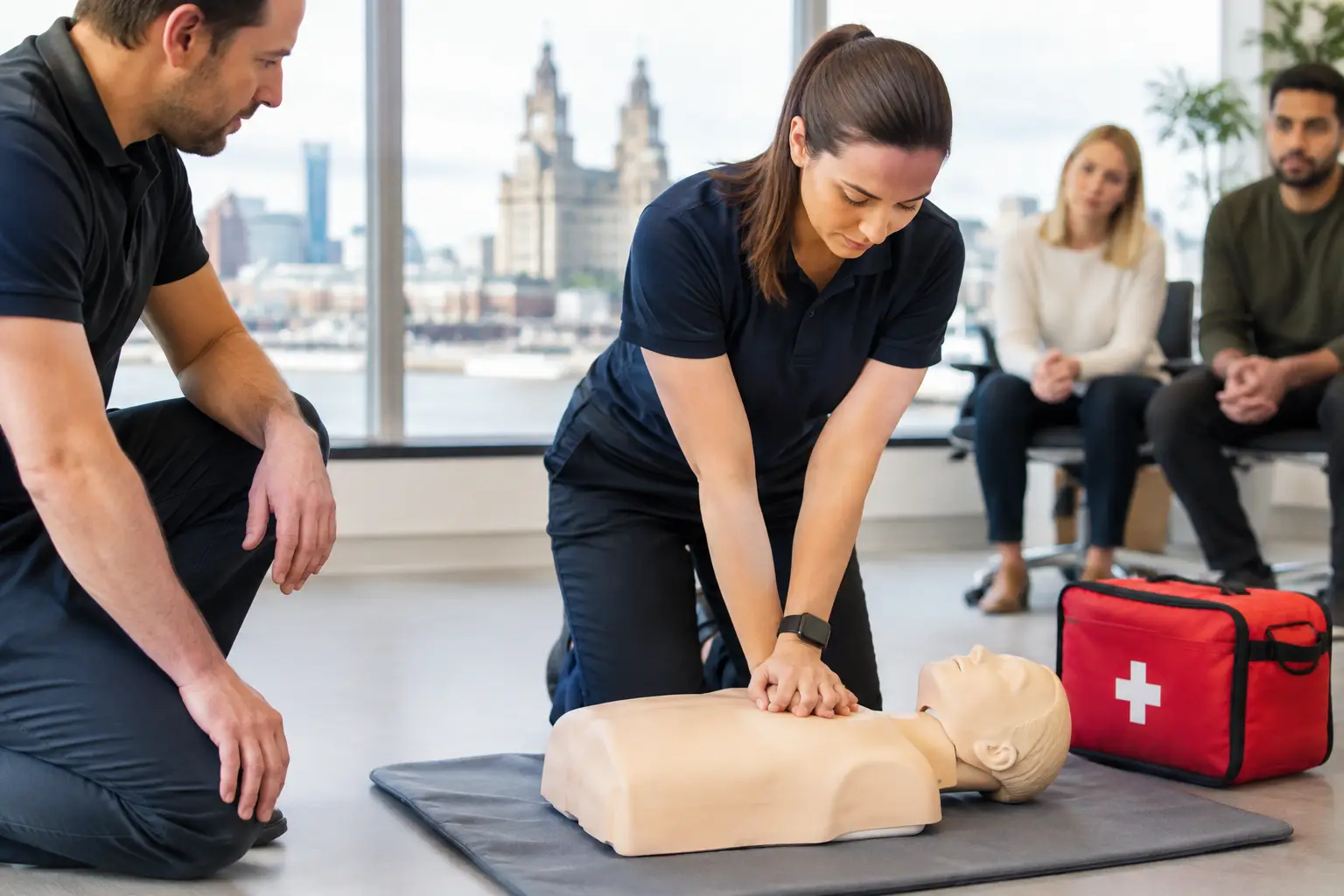
Choose training that gives people time to handle equipment, practise CPR on manikins, use an AED trainer and work through situations they could genuinely encounter. A workplace-based session can make this more meaningful because staff can discuss access points, emergency contacts, first aid kit locations and any barriers to reaching a casualty.
Protect your people by treating refresher training as regular preparation, not an administrative task. When the emergency is real, familiar skills and confident action can save lives.
Need First Aid Training for Your Team
Training 2 U provides practical, on-site first aid, CPR and AED training across Liverpool, Merseyside and the North West.
With over 30 years' frontline clinical experience and group training options for up to 12 learners, we help organisations develop confident, capable responders.


Comments